Hamid Hassani

PhD candidate at the University of Alberta

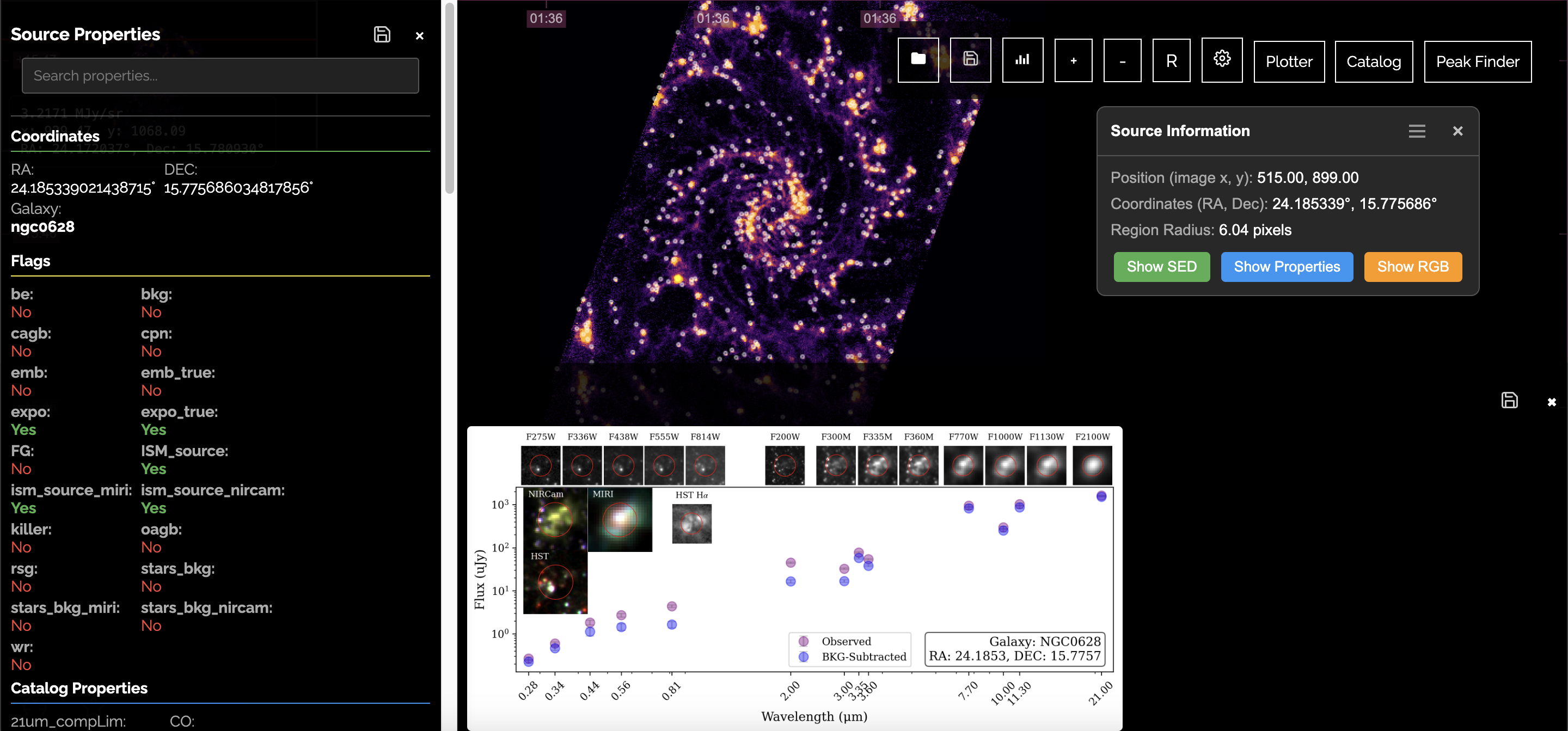
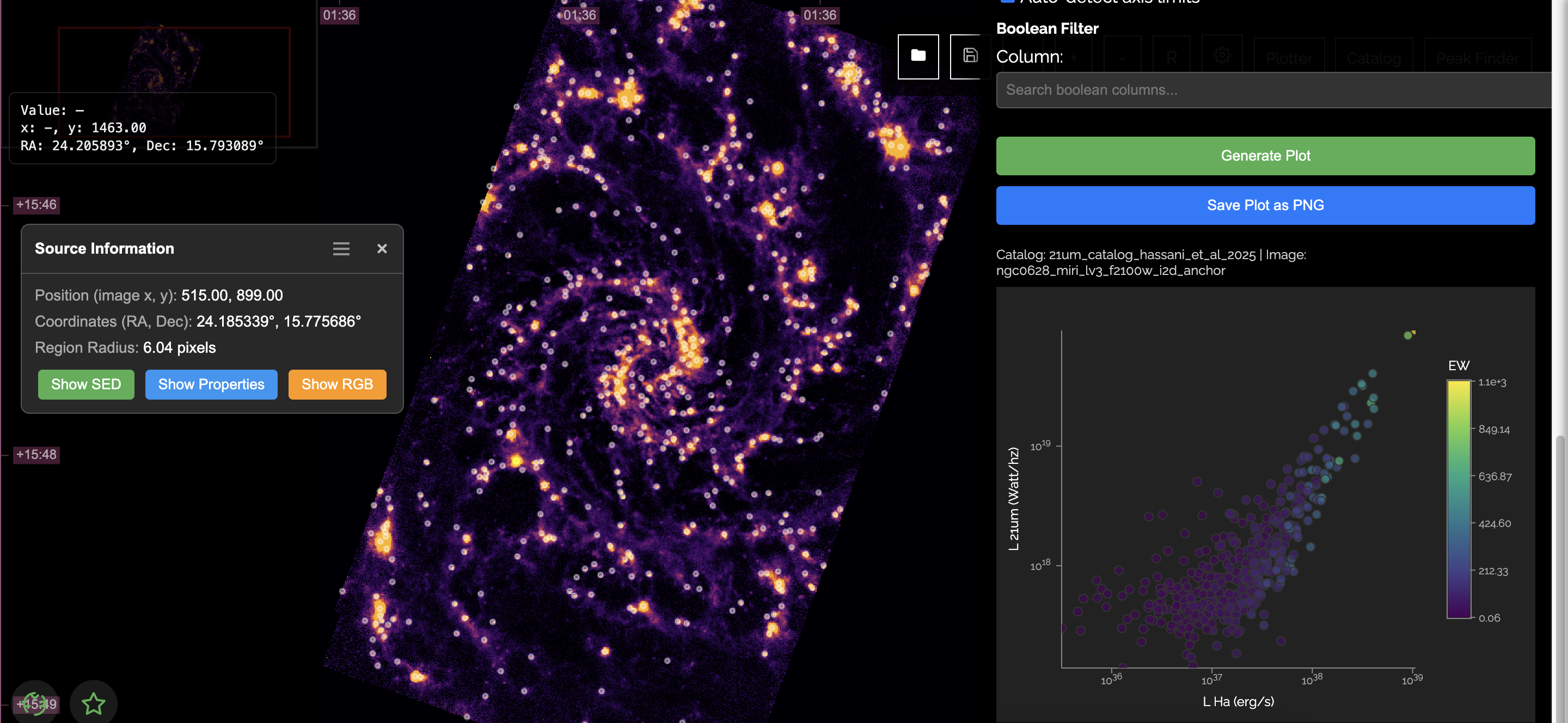
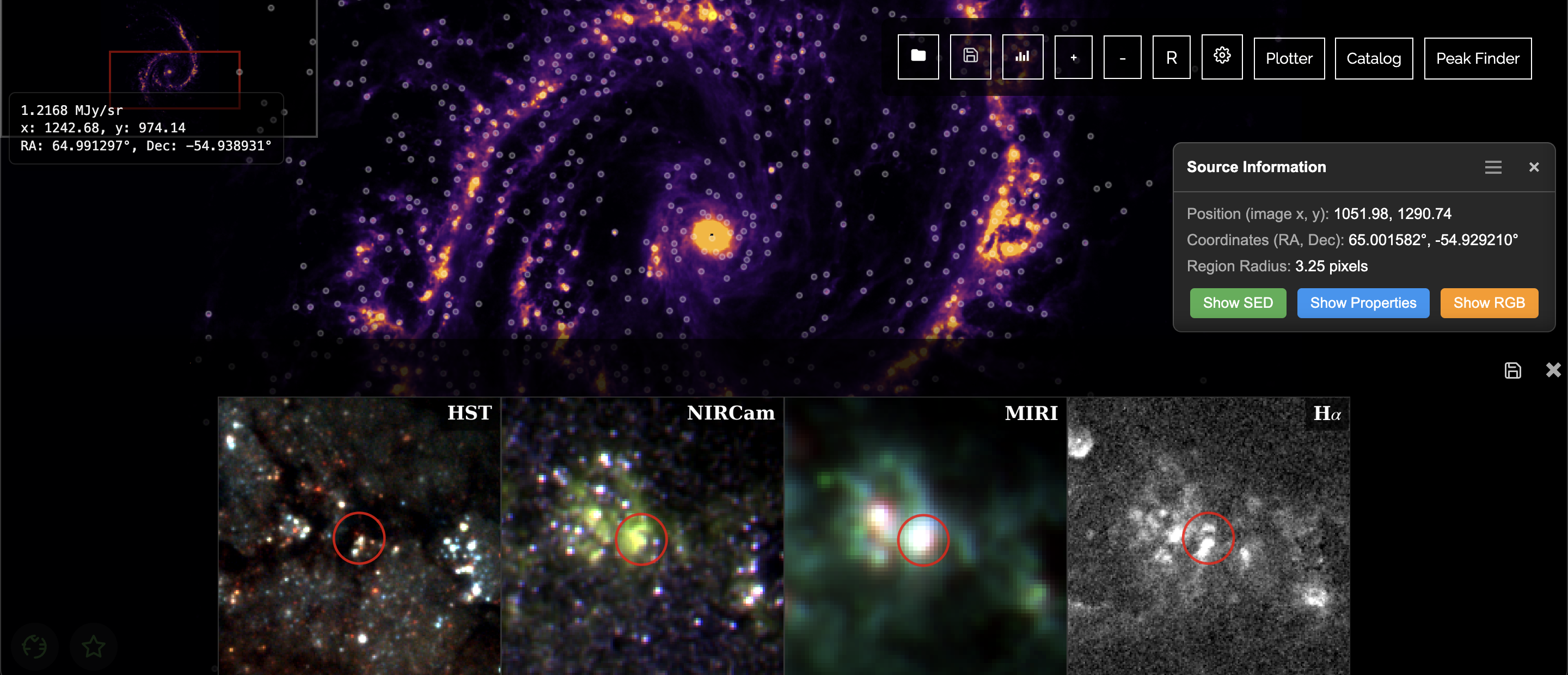
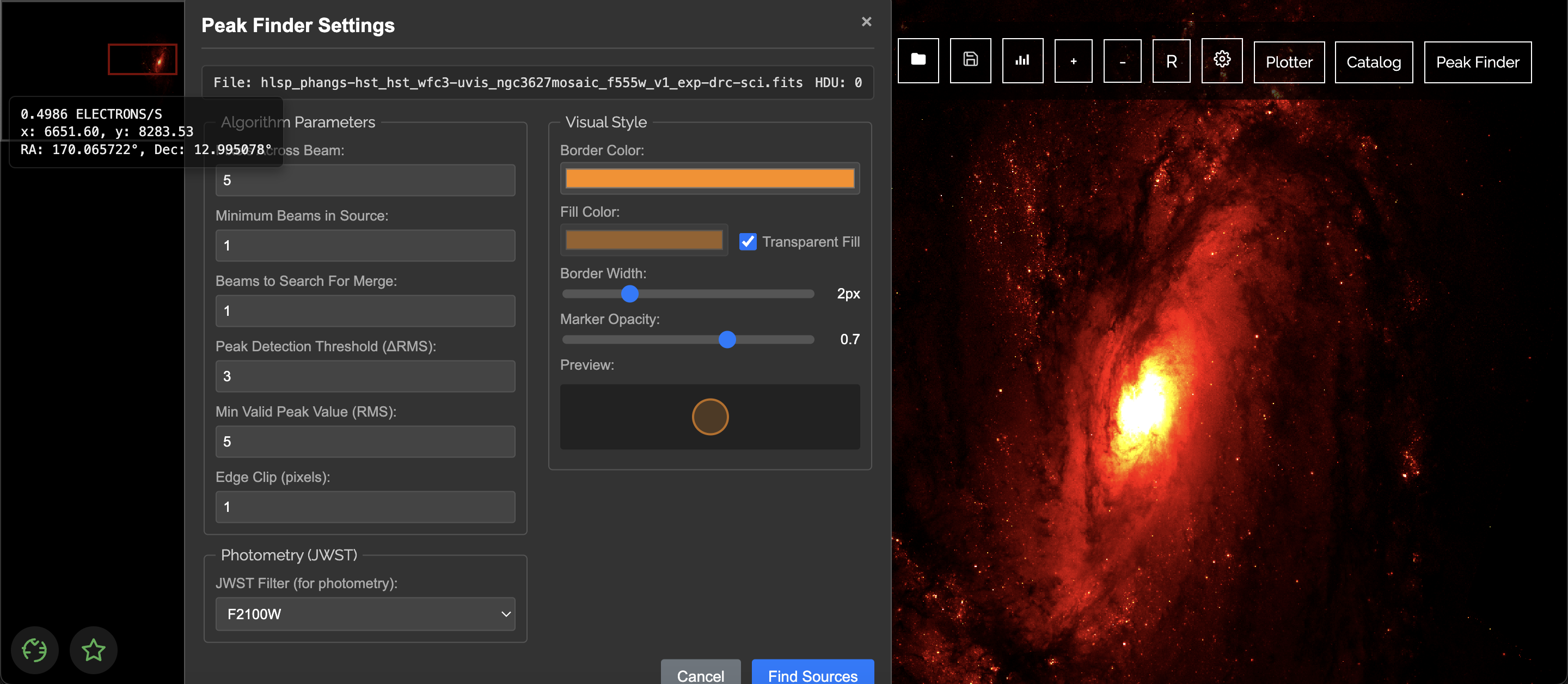
I study how stars, stellar clusters, and the ISM evolve across cosmic time using JWST, HST, and VLA data within PHANGS, and I developed Neloura, a platform for astronomical image visualization, cataloging, SED inspection, and interactive source finding designed for the next generation of datasets such as SKA.

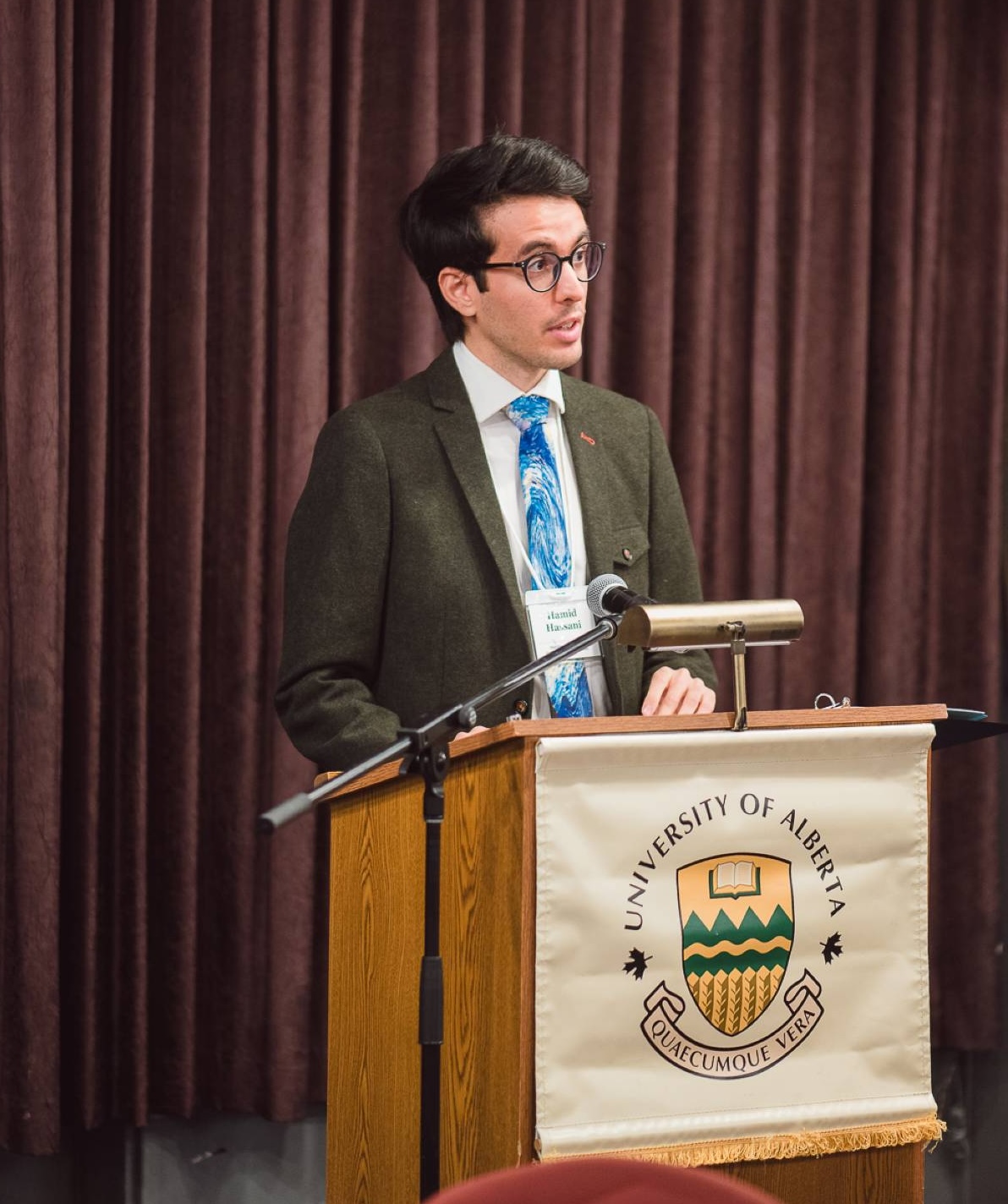
Hamid Hassani smiling in a colorful setting

Research focus

I am currently focused on multi-wavelength diagnostics that connect dust physics, stellar clusters, and the ISM across nearby galaxies, combining infrared, optical, ultraviolet, millimeter, and radio observations with advanced visualization tools to uncover how stellar clusters evolve and how feedback, dust, and environment shape their emission.

Observational programs

  • AstroSat/UVIT: PHANGS–AstroSat–Color Survey (PI; 12 hr)
  • AstroSat/UVIT: PHANGS–AstroSat–Dwarfs Survey (PI; 15 hr)
  • JWST: PHANGS–JWST Treasury (Co-I; 150 hr total)
  • JWST: Massive star formation in galactic centres (Co-I; 62 hr)
  • HST: Cycles 31–32 cluster & dust mapping (Co-I; 288 orbits)
  • HST: HST+JWST+ALMA Treasury survey (Co-I; 169 orbits)
  • ALMA: The 10 pc Survey of Molecular Clouds & Feedback (Co-I; 600+ hr)
  • MeerKAT: PHANGS dwarf-galaxy atomic gas mapping (Co-PI; 60 hr)
Neloura interface showing multi-panel FITS workflows Neloura catalog overlays and diagnostics Neloura catalog overlays and diagnostics Neloura catalog overlays and diagnostics
Next-gen astronomical image visualization and analysis.

Neloura

Powered by Python and JavaScript, Neloura delivers in-browser visualization of large astronomical mosaics, catalogs, SEDs, and interactive source finding—no installation required. It is designed for the massive datasets expected from SKA, Roman, and other next-generation missions.

Advocacy & representation

Student governance roles that keep my research accountable to people first.

  • Vice President External, Graduate Students' Association (GSA) · Led provincial and municipal advocacy for 10,000+ graduate students (2023–2024).
  • Co-Chair, Alberta Graduate Provincial Advocacy Council (ab-GPAC) · Coordinated province-wide policy efforts for 20,000+ graduate students (2023–2024).
  • Vice-Chair, Edmonton Student Alliance (ESA) · Represented nearly 100,000 post-secondary students across Edmonton to city leadership (2023–2024).
  • Graduate Student Representative, University of Alberta Alumni Council · Provided student voice and policy input at the institutional level (2023–2024).
  • Ambassador, Graduate Physics Student Association (GPSA) · Supporting departmental community and governance (2024).

Published papers as first author

Recent lead-author work using multi-wavelength data from JWST, HST, ALMA, and AstroSat, with each entry noting the analysis or tools I led.

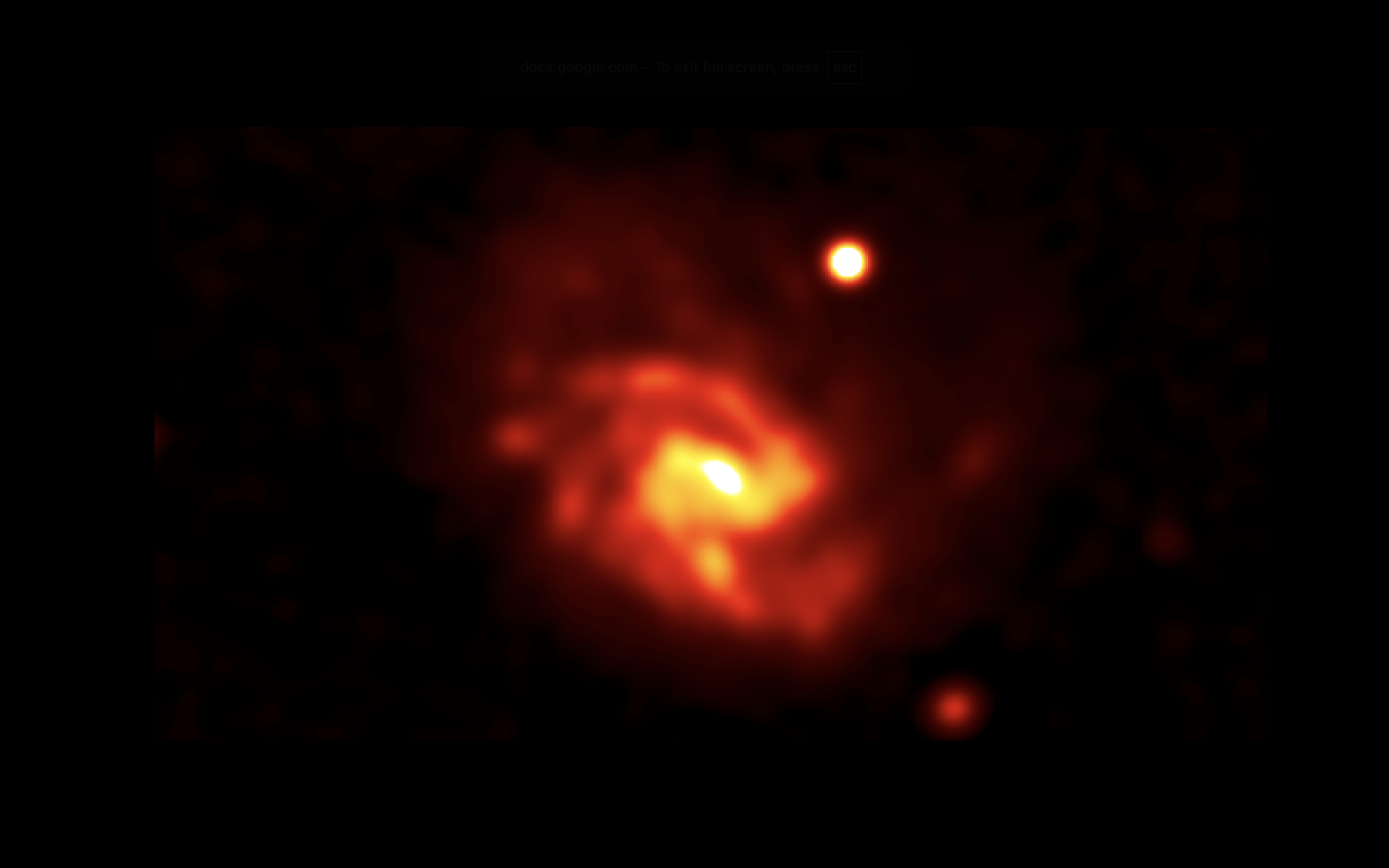
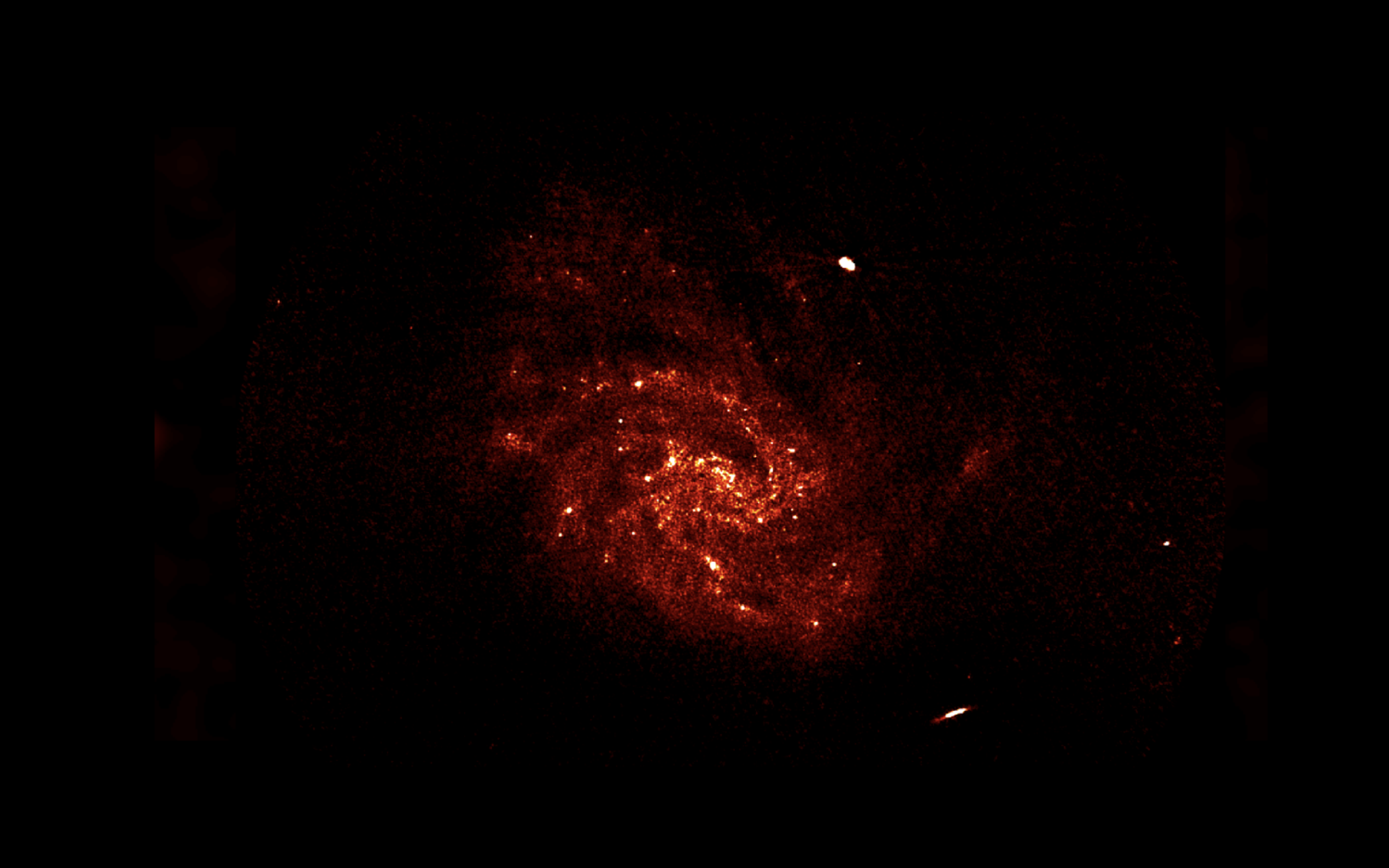
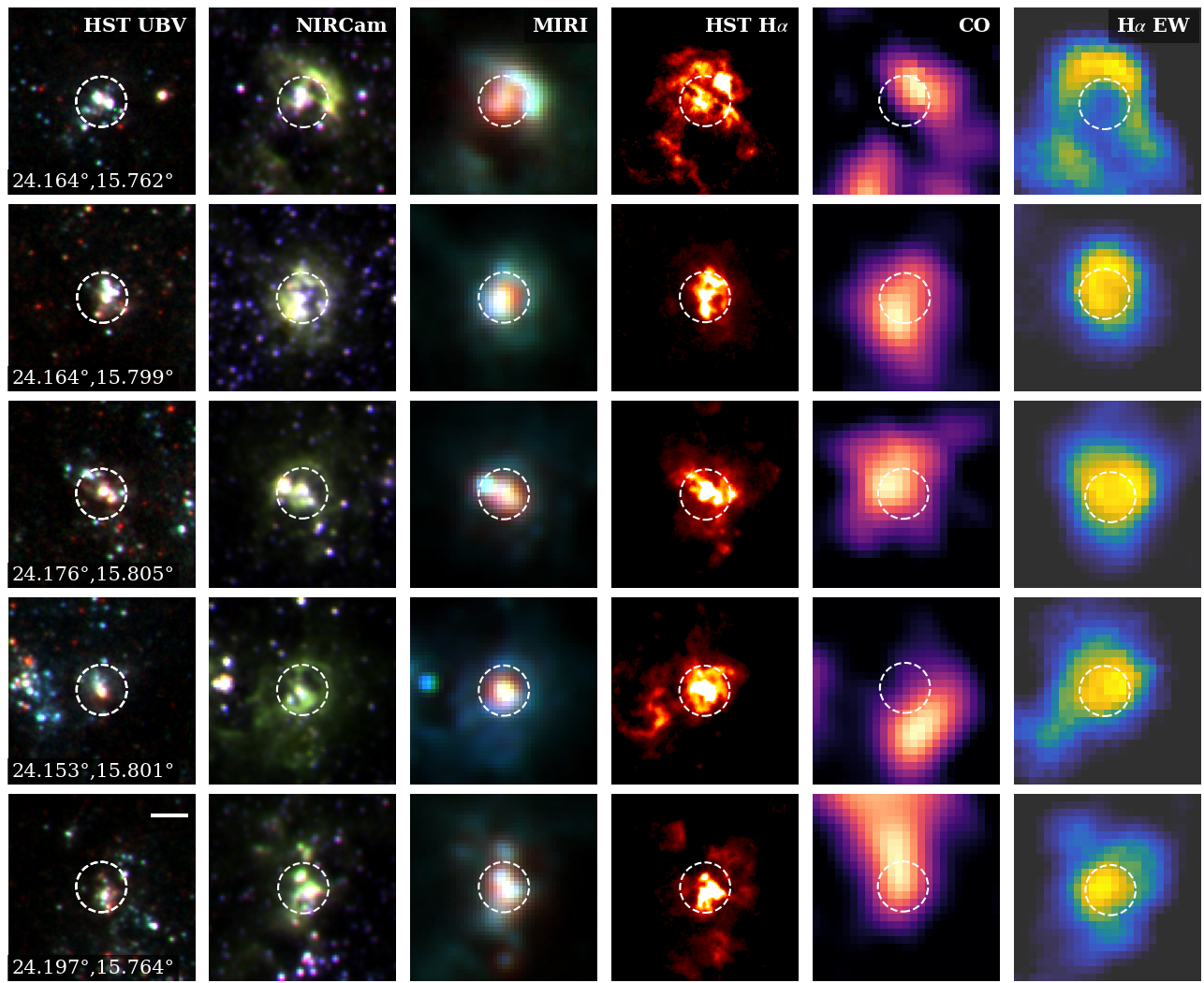
JWST mid-infrared composite of nearby galaxies Source catalog overlays from the Hidden Life of Stars paper Source catalog overlays from the Hidden Life of Stars paper
2025 · arXiv e-prints

The Hidden Life of Stars: Embedded Beginnings to AGB Endings in the PHANGS-JWST Sample. I. Catalog of Mid-IR Sources

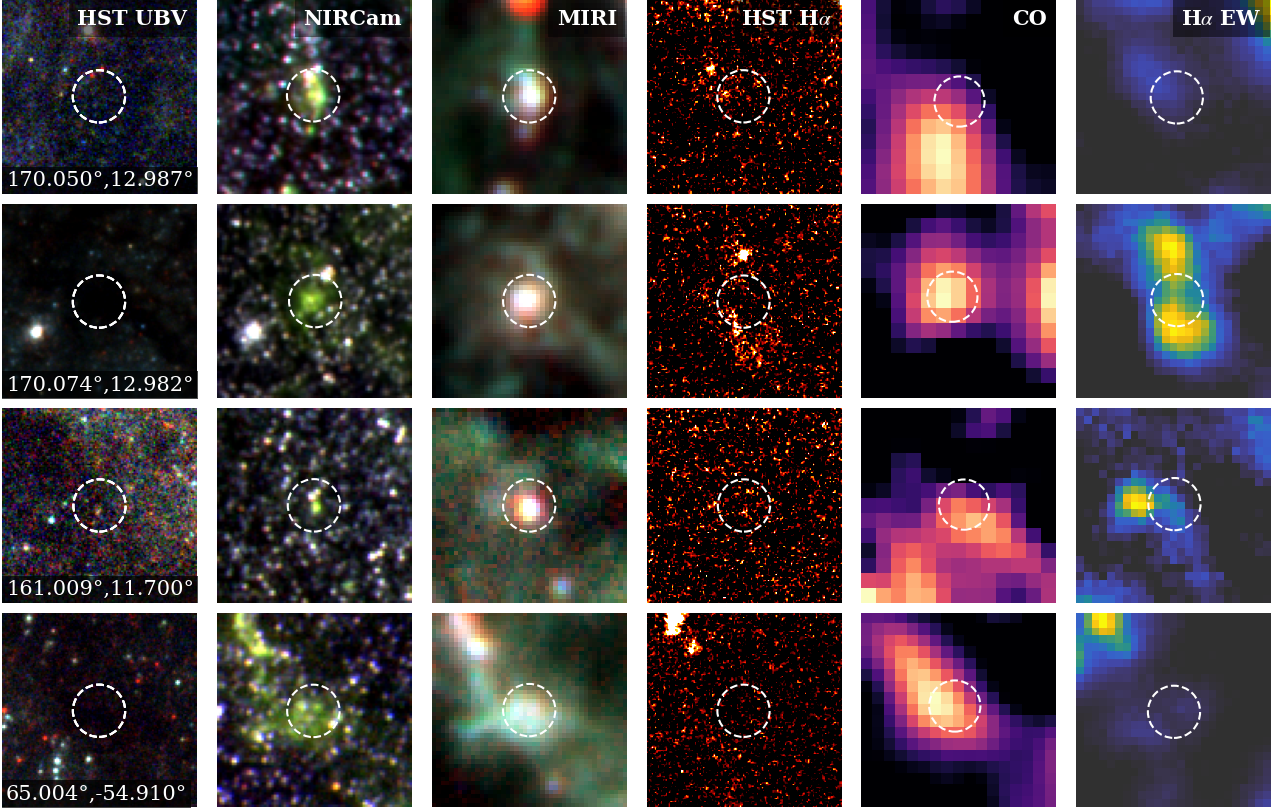
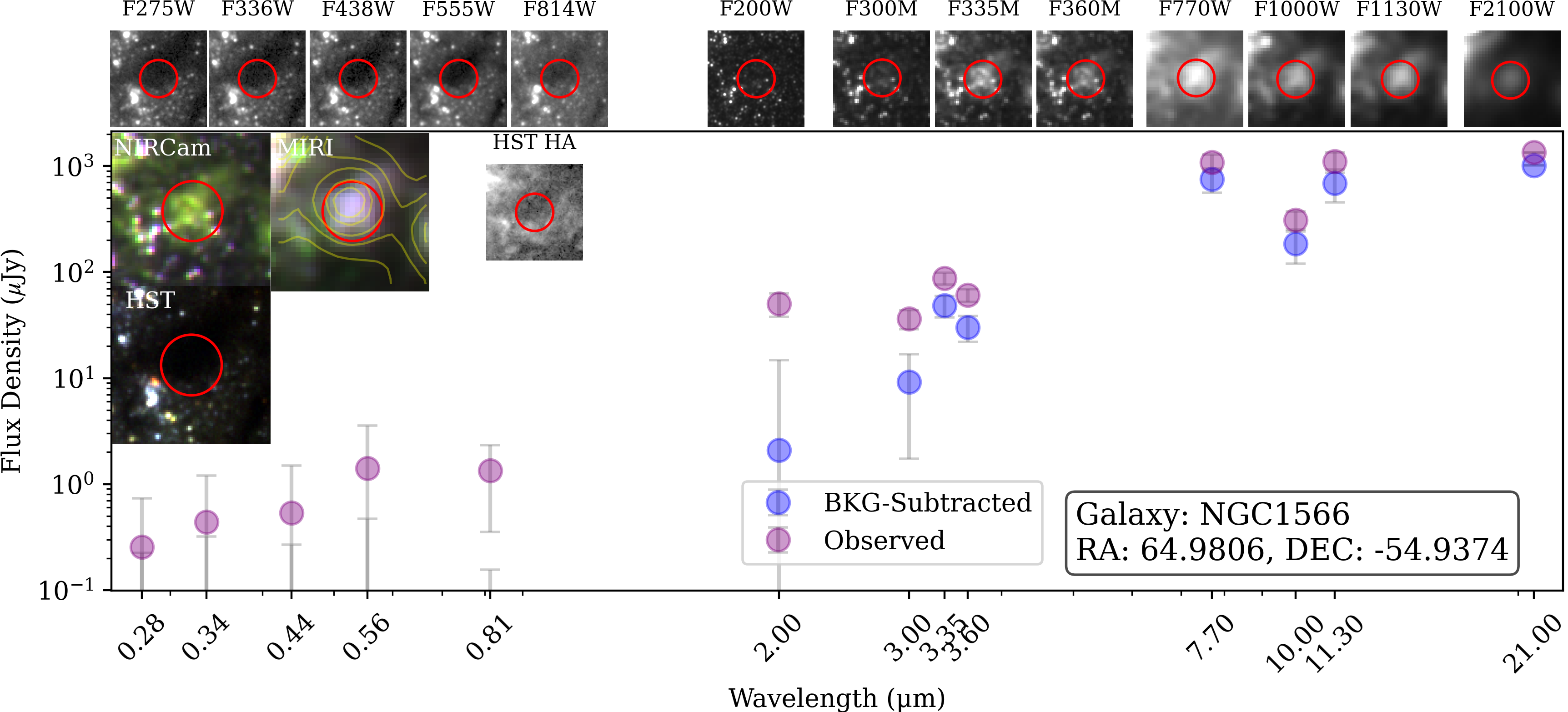
My research with JWST has defined a new framework for tracing how stellar clusters evolve from their dusty, embedded birth to their exposed and evolved stages across nearby galaxies. I led the first systematic censuses of compact mid-infrared sources using JWST imaging, identifying and characterizing tens of thousands of stellar clusters spanning the full evolutionary sequence—from deeply embedded stellar clusters to red-supergiant and AGB-dominated populations.

Read on arXiv →
AstroSat ultraviolet atlas montage
2024 · ApJS

The PHANGS-AstroSat Atlas of Nearby Star-forming Galaxies

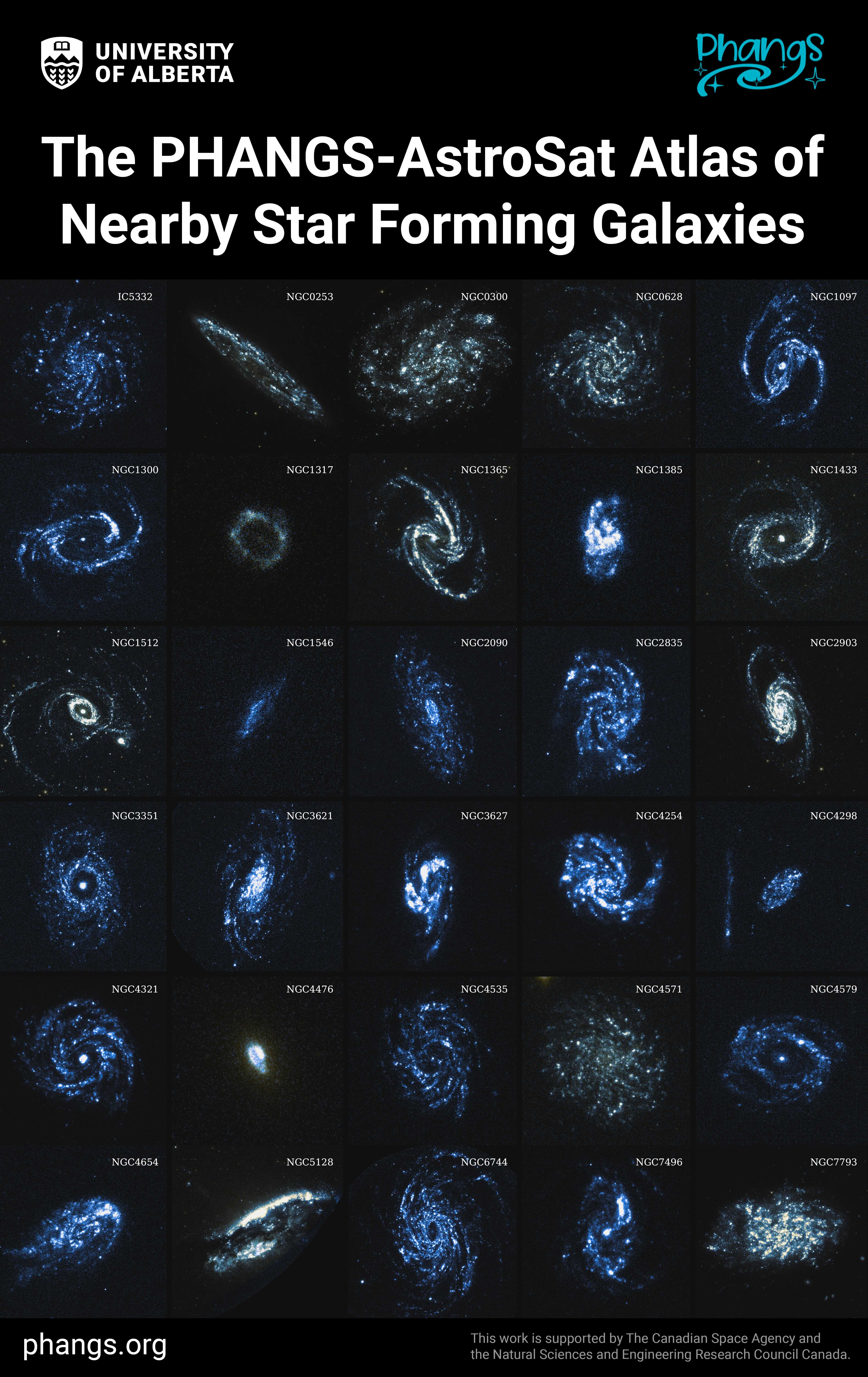
Using AstroSat/UVIT, I calibrated over 150 maps of 31 nearby galaxies at ~1.4″ (25–160 pc) resolution, providing the sharpest wide-field UV images across 9 filters from 1480 Å to 2790 Å. Combined with MUSE Hα and ALMA CO(2–1) data, these maps reveal that the FUV/Hα ratio varies by nearly two dex, decreasing in high-pressure centers and bars—evidence that clusters clear their natal gas more rapidly in dense environments. After correcting for attenuation and controlling for stellar mass and metallicity, FUV/Hα increases with stellar population age, tracing cluster emergence as H II regions fade. We also identified extended ultraviolet disks—faint, outer-disk structures marking recent star formation beyond the optical radius.

Read the paper → Data→
21 micron compact source population visualization
2023 · ApJL

PHANGS-JWST First Results: The 21 µm Compact Source Population

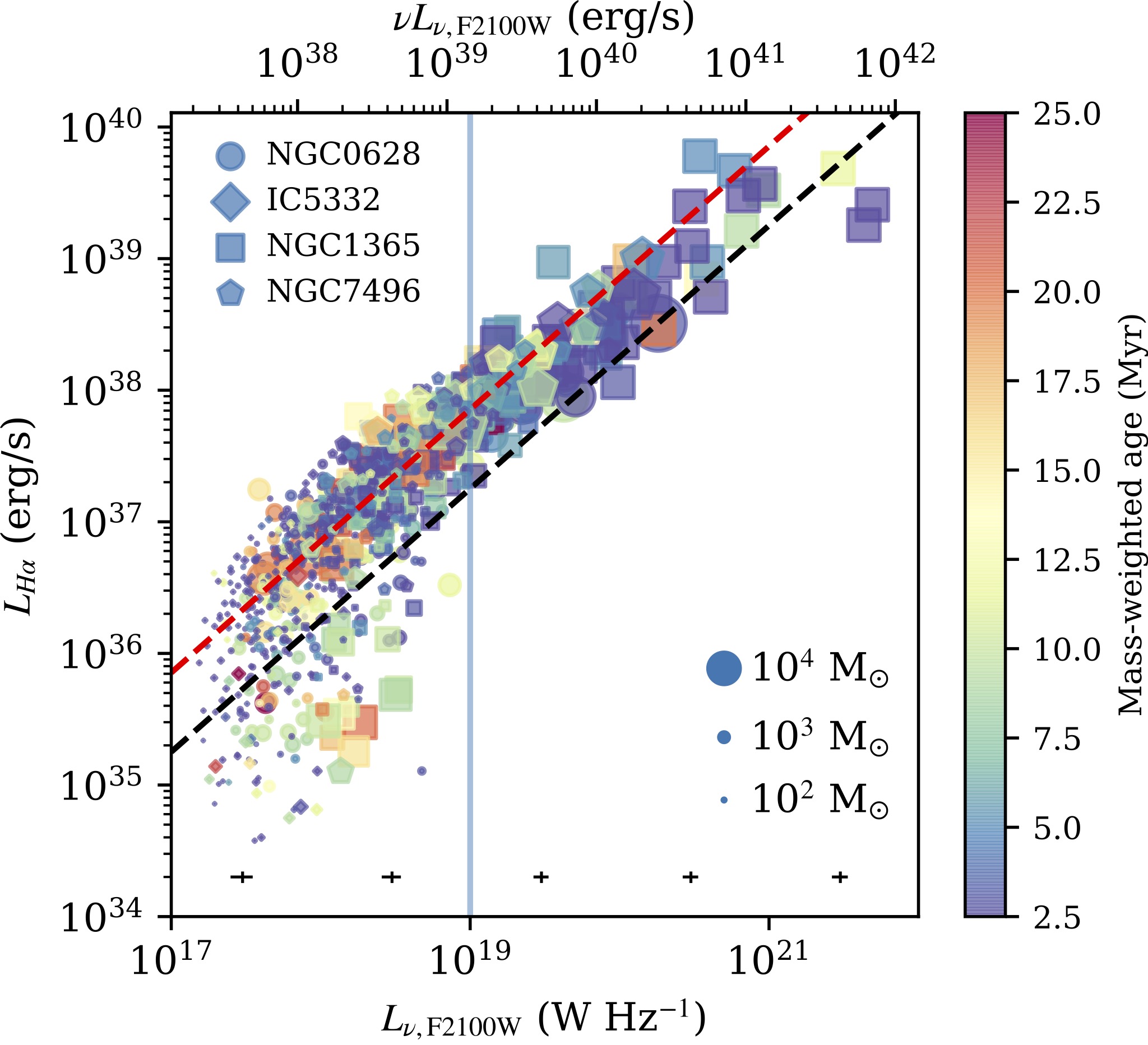
My research asks how long massive clusters remain hidden in their dusty, embedded phase before emerging as feedback-dominated systems. I find that such regions are rare in nearby galaxies, implying a short lifetime of only a few million years. Combining mid-infrared and optical diagnostics, I show that 21 µm emission robustly traces nascent (< 5 Myr) clusters and correlates tightly with Hα emission over five orders of magnitude

Read the letter →
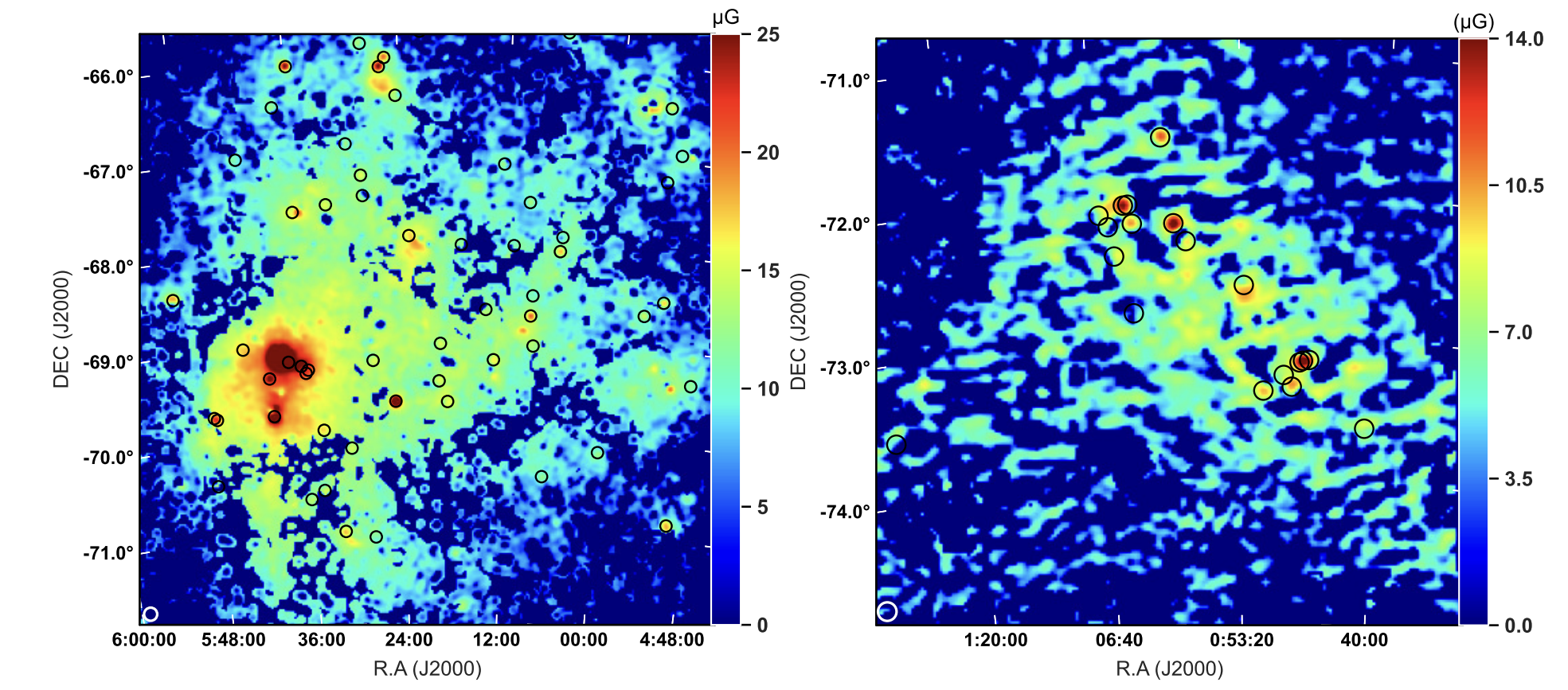
Spectral energy distribution fit for the Magellanic Clouds
2022 · MNRAS

The Role of Thermal and Non-thermal Processes in the ISM of the Magellanic Clouds

Using single-dish and interferometric observations spanning three frequency bands from 0.16 to 4.8 GHz—including GLEAM/MWA (166 MHz) as the low-frequency SKA precursor, and ATCA and Parkes data—I combined multi-band radio maps with de-reddened Hα emission to produce the spatially resolved thermal and non-thermal component maps of the Magellanic Clouds. Whereas previous studies have established that cosmic-ray electrons steepen their synchrotron spectra as they propagate, and that magnetic-field strength correlates with the star formation rate, my study goes further. Using resolved radio continuum maps of these metal-poor galaxies, I demonstrate for the first time across ISM phases that non-thermal (cosmic-ray + magnetic-field) energy dominates the ISM under equipartition, and that magnetic-field amplification and cosmic-ray feedback are tightly coupled to the star formation rate even in low-metallicity regimes.

Read on MNRAS →

Contact & availability

Email hhassani@ualberta.ca